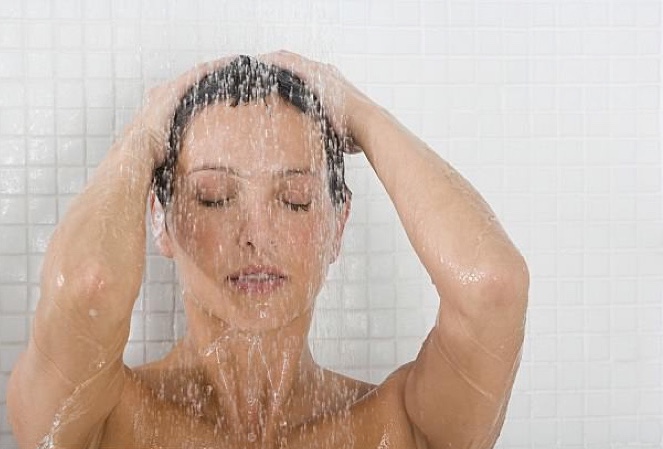
Apparently drinking water is not the only path to get glowing skin. Is your water hard or soft and what effect does that quality have on your skin. Have you noticed that when you travel your skin tends to look better? Well, the reason for that is apparently the water. Here are tips about the effect that water texture has on our skin
The water
You see, there are two different kinds of tap water: hard and soft.
Perhaps you’ve heard these terms before… but what you might not know is how they affect your skin’s health.
You see, soft water is water that contains very few mineral deposits – good news for your skin.
But hard water contains a lot of minerals – specifically calcium and magnesium.
This is where the bad news starts.
Dry places like Texas, the Southwest, and right here in Southern California have some of the hardest water in the country…
Followed by the Great Lakes region, the Midwest, Tennessee, and parts of the Pacific Northwest.
In fact, about 85% of the U.S. has at least moderately hard water.
The reason Kendhal’s skin was extra soft and smooth in Rhode Island was that New England is one of the few places in the country with soft water…
Whereas in “hard water areas,” people tend to notice skin irritation, dehydration, flaking, and even breakouts.
And it makes perfect sense – when you wash with hard water, you’re essentially also “washing” with tiny, microscopic rocks from the ground.
One more piece of bad news about hard water…
When you wash your face, do you get that “squeaky clean” feeling after you’re done?
Well, unfortunately, that means your skin ISN’T as clean as you think…
It actually means you have a layer of minerals caked onto your face that will only get worse by washing with the same water over and over.
If this sounds like something you’re experiencing, you can find out how hard YOUR water is by doing a few easy tests right at home:
- See how much your products lather. The less it lathers, the harder your water is.
- Check for a crusty ring around your bathtub. This is the “residue” hard water leaves behind – the same stuff that’s sitting on your skin.
- Leave a glass filled with about a tablespoon of water until it evaporates. If a grainy white film is left behind, it’s a clear sign of hard water.
If you do have hard water like most people, there are a few things you can do to stop its damaging effects on your skin:
1. Use bottled water.
Many of my clients like to wash their face with bottled water, because of how much softer and purer it is than LA faucet water. This can get a little pricey when done daily, but I encourage anyone with hard water to do it at least once a week to keep skin radiant and film-free.
2. Wash your face with filtered water.
If you’d rather not keep a stockpile of bottled water in your house, you can use filtered water instead. This can either be from a faucet filter or a filtered pitcher. This will only clean away some of the minerals, but it will still help to give you a more purified wash than hard tap water.
3. Do a waterless wash.
This has always been one of my favorite tips, especially for people with dry skin. Instead of rinsing cleanser away, just wipe it off with a soft cloth or tissue. Use this technique 3 times a week, and wash normally with water all other times to get the best results.
There IS a fourth option: buying a water softener. But this is very expensive, so I encourage all of my clients to only invest in a softening system as a last resort. Most people don’t need it if they use one of the techniques I mentioned above.
I know using these tips will help you beat the effects of hard water – and get back to the glowing, healthy skin you deserve.